


epatocentrism is the widely held belief among many ancient civilizations that the liver is the center of the human being and from it sprang life, the soul, emotions and intelligence. This belief persisted into the Middle Ages and was frequently referenced in art and literature.
Cover one
Histotripsy
New Game-Changing Technology
By Ashwin S. Kamath, MBBS

Although modern science suggests this may not specifically be the case, the liver is vital to survival. It is the largest organ inside the body and has the unique ability to regenerate up to 70% of lost or damaged tissue in as quickly as six weeks. The first successful liver transplant occurred in 1967. In 2025, more than 12,300 liver transplants were performed in the United States. Today, liver cancer accounts for almost 5% of all cancer deaths. It is the sixth most common cancer worldwide, and its incidence is growing. Globally, more than 800,000 deaths annually are attributed to liver cancer. Against this backdrop, ultrasound scientists at the biomedical engineering department of the University of Michigan began work that led to the development of a new field, histotripsy.
A Brief History
It began with a request from a pediatric cardiologist to develop a noninvasive, bloodless surgery technique that could remove tissue. Ultrasound had been known for more than 50 years by 2001 but had not been considered reliable, predictable or controllable enough for surgical applications. Eventually, researchers discovered a way to predictably and reliably create holes in a pig's heart suspended in liquid. Researchers continued working to solve the problems of directing ultrasound energy with enough precision that it could target places within the body only 1 millimeter wide. Their work ultimately led to histotripsy, which uses focused ultrasound energy to destroy targeted tissue without surgery.
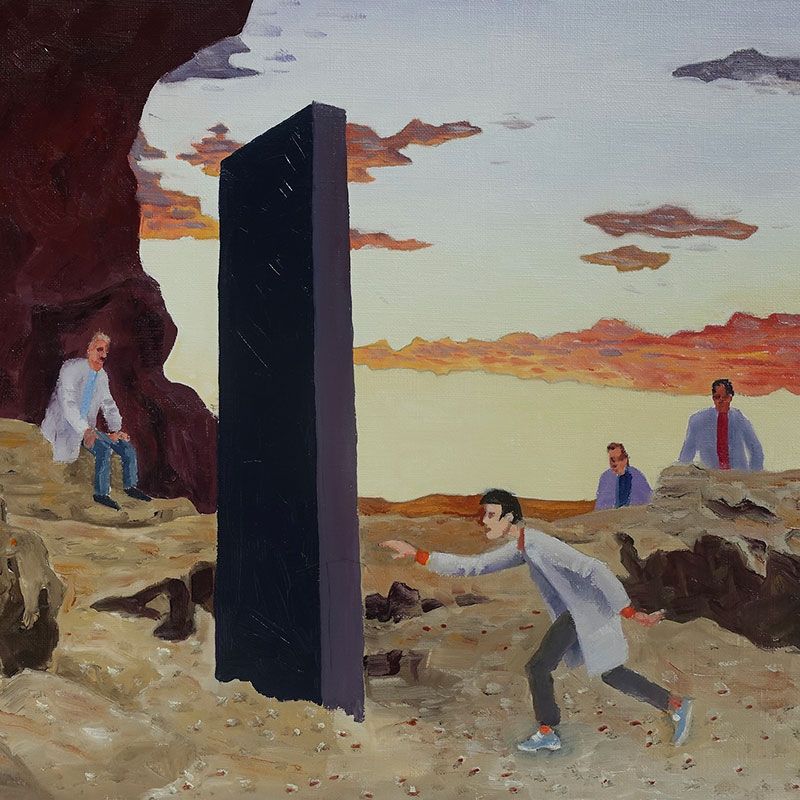
The process may seem like something out of a sci-fi movie to patients.
The technology could be utilized in many ways; however, researchers initially focused on developing a product to remove tumors in the liver, and eventually clinical trials proved the concepts and mechanisms were successful. This led to the formation of a Minnesota-based company called HistoSonics, a product called the Edison Histotripsy System and, on Oct. 9, 2023, approval from the Food and Drug Administration (FDA) to bring the technology to market. Today, histotripsy is a noninvasive treatment technique that uses ultrasound waves to destroy cancer cells while preserving healthy liver tissue.
Practical Applications
Understanding which patients may benefit from histotripsy begins with understanding the different types of liver cancer. There are two types of liver cancer: primary and secondary. The latter occurs when cancer spreads from another part of the body. Primary cancer typically begins in the liver or the liver's bile ducts. Unlike breast cancer, there is no early detection screening like a mammogram for liver cancer. Noticeable symptoms may not occur in the early stages of liver cancer. Physicians typically use blood tests, angiograms, CT scans or MRIs to make a liver cancer diagnosis. The five-year survival rate for liver cancer is 22%. Removing tumors while preserving as much liver as possible is paramount to increasing chances of survival. Histotripsy is one of the tools that can help achieve that goal.




Driven by its dedication to expert care and the use of technology that improves patient outcomes, Allina Health Cancer Institute became the first health system in the Twin Cities to use histotripsy as part of its multidisciplinary approach to liver cancer in September 2025. Histotripsy is expanding treatment options for patients with liver cancer who are not candidates for surgery. While the process may seem like something out of a sci-fi movie to patients, this technology is giving people with primary and metastatic liver cancers another option for life-saving care.
Each liver cancer case must be evaluated based on the number of tumors present in the liver, as well as the size and location of the tumors. Adding a liver surgeon to a cancer patient's care as early as possible gives the liver surgeon time to evaluate the disease and determine the best treatment approach. In some cases, histotripsy may be the only treatment needed. In others, it may be used in conjunction with surgery and other therapies to help render a patient cancer-free.
To treat a tumor with histotripsy, it must be visible. A tumor deeper than 12 cm could be difficult to see because of interference from the rib cage. The bubble cloud caused by cavitation is only about 3 cm wide. Larger tumors could require multiple overlapping treatments, which can increase complexity and certain risks, such as bleeding. In situations like those mentioned above, histotripsy may not be the best or only option for treatment.
Removing tumors while preserving as much liver as possible is paramount to increasing
chances of survival.
Liver surgeons combine their years of expertise with training on the use of the histotripsy system. Training for clinical teams includes completing online modules and case observations as well as work with a physician proctor and clinical specialist to learn to use histotripsy. Training also incudes practicing on animal liver pieces.
Patients often ask what makes histotripsy different from radiation. Unlike heat-based ablation or radiation therapy, histotripsy does not injure critical structures such as blood vessels and bile ducts. Histotripsy uses pulsed sound waves to create "bubble clouds" from gases naturally present in targeted tissue. These bubble clouds form and collapse within microseconds, generating mechanical forces strong enough to destroy tissue at the cellular and subcellular levels without heat or incisions. The treatment area can be controlled precisely, resulting in minimal collateral damage.
Depending on the size of the tumor, treatment can take as little as 10 minutes, although larger tumors may require more time. Because the procedure does not require an incision, patients typically do not need to stop taking important medications such as blood thinners or chemotherapy. Physicians have observed treatment zones shrink over time in histotripsy patients during follow-up visits, unlike ablation, where the treatment defect remains.





How it Works
If you break down the name of this technology, "histo" means soft tissue and "tripsy" means breaking apart. Using MRI and CT scans, the care team maps the patient's liver and identifies the location of cancerous cells. They later enter that information into Edison, the histotripsy system that delivers pulsed sound waves to the designated area. This system has three main components: the user interface control panel, automated treatment arm and treatment head. Edison needs a water source and electrical outlet to work, and the patient requires anesthesia to undergo the process. Once the patient is anesthetized, a flexible membrane filled with degassed water is placed over the area where treatment is needed. Sound waves pass through the skin and target cancerous cells without the use of a single scalpel.
Patients often experience several advantages following histotripsy. It is so painless that some patients have questioned whether it was performed because they did not feel anything. The most important benefit is preserving as much liver as possible. Other benefits include rapid recovery, same-day discharge and minimal disruption of treatment and daily activities.
Through innovation, the treatment of liver cancer has progressed from large open operations to the bubble clouds of histotripsy. As research advances and indications expand, histotripsy may transform the treatment of additional cancers, offering new hope for patients worldwide. To date this pioneering medical procedure has only been approved by the FDA for the treatment of liver cancer. Trials, however, are currently underway to investigate histotripsy's effectiveness when it comes to cancers of the kidney, pancreas and prostate.
Ashwin S. Kamath, MBBS,
is a surgeon at the Allina Cancer Institute specializing in treating liver and pancreatic cancer.
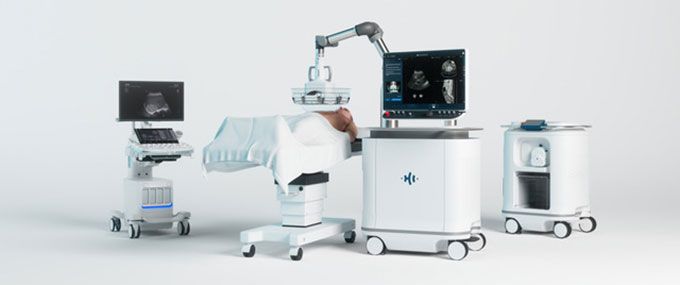
The Edison Histotripsy System, developed by Histosonics, is displayed in the photo above. The screen on the left shows real time imaging of the tumors as they are being dissolved. The arm on the device to the right is positioned over the patient to direct the ultrasound.
As Dr. Kamath mentions at the end of his article, work is moving forward with trials to adapt this technology for use in treating other organs. The following information was recently released by Histosonics.
The Edison System has been adapted for successful treatments of the first patients in WOLVERINE, a prospective feasibility trial evaluating the Edison® Histotripsy System for the treatment of benign prostatic hyperplasia (BPH) at Prince of Wales Hospital in Hong Kong, a teaching hospital for The Chinese University of Hong Kong. The Edison System is a novel, non-invasive, image guided platform that uses the mechanical properties of focused ultrasound, called histotripsy, to destroy unwanted tissue without the need for invasive procedures, and with potentially fewer side effects than traditional, invasive therapies.
WOLVERINE is a prospective, multi-center, single-arm feasibility trial designed to evaluate the safety of the Edison® Histotripsy System for the treatment of symptomatic benign prostatic hyperplasia (BPH). The trial is expected to enroll and treat up to 20 patients. Following treatment, participants will undergo imaging within 72 hours of the procedure to assess the immediate treatment effect. Patients will then be followed longitudinally to further evaluate safety and procedural outcomes.
“BPH affects millions of men worldwide and most of the existing treatment options require invasive procedures or lengthy recovery times,” said Mike Blue, Chairman and CEO, HistoSonics. “We believe histotripsy’s ability to mechanically destroy targeted tissue, completely non-invasively, has the potential to transform how BPH is treated. In addition, this milestone represents significant progress in our pursuit to expand the unique benefits of histotripsy over a significant number of serious clinical conditions throughout the body.”
“We are excited and extremely proud that Prince of Wales Hospital is the first center in the world to offer this novel treatment approach in a clinical trial and potentially benefit patients with BPH in the future,” said Dr. Peter Chiu, study investigator and Associate Professor of The Chinese University of Hong Kong. “If shown to be safe and effective, the non-invasive nature of histotripsy has the potential to change how BPH is treated for many patients suffering from lower urinary tract symptoms around the world.”
BPH is one of the most common urological conditions affecting aging men. Approximately 50 percent of men over the age of 50 and up to 80 percent of men over the age of 80 experience symptoms associated with BPH. Globally, more than 110 million men are affected by the condition, and its prevalence is expected to continue increasing as populations age.
The Edison Histotripsy System is currently cleared in the United States for the destruction of liver tumors. The use of the Edison System for the treatment of benign prostatic hyperplasia is currently limited to investigational use.





























MORE STORIES IN THIS ISSUE
cover story one
Histotripsy: New Game-Changing Technology
By Ashwin S. Kamath, MBBS
cover story two
Female Urinary Incontinence: A difficult discussion
