


elping patients receive the best care doesn’t end when the patient leaves the hospital or clinic. In fact, once they leave, your patients begin a different, and often arduous, process. Many patients struggle with planning how to return to the clinic for their next appointment, or how to arrive at the hospital or treatment facility for follow-up care or procedures. Missed patient appointments are a major concern throughout the entire health care delivery system.
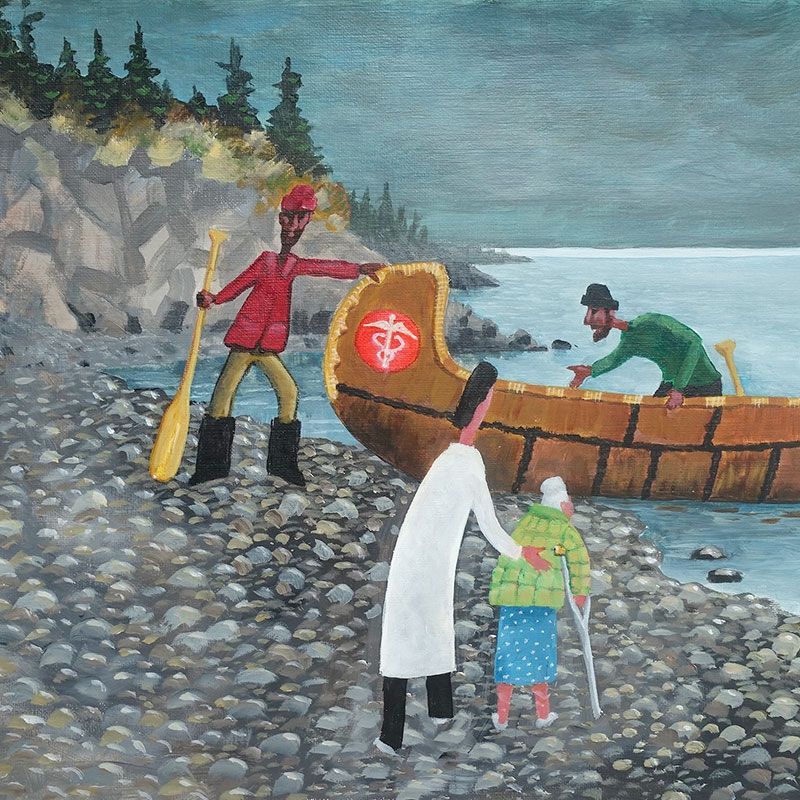
Cover one
Non-Emergency Medical Transportation
A hidden variable in patient cares
By David Beard, PhD

For example, when an expecting mother misses prenatal care appointments, the risks of premature birth rise with surgical births and complications becoming more likely. Mortality rates also rise.
On the other side of the lifespan, as we age, doctor’s appointments become more important for managing chronic conditions. For example, a missed dialysis appointment becomes a visit to the emergency room, one of the most expensive forms of medical care possible.
Treatment of a single condition may require trips to multiple sites and specialists. After all, health care is fragmented and oftentimes not delivered under the same roof. For example, a cancer patient must get to their oncologist and then will likely require chemotherapy at an infusion center, rehab at another location and perhaps evaluations from other medical professionals (a plastic surgeon or a neurologist, for example). Having cancer can almost be a full time job and involve social workers, nutritionists and others — all in different locations. This does not even take into account trips to the pharmacy for various medicines, including ones just to reduce nausea as a side effect of the chemotherapy.
The nonemergency medical transportation system is overwhelmed.
A Deeper Look
Some problems in health care are clear. It’s easy to see that health care is expensive and that the private insurance system makes it difficult for patients to receive care. It’s easy to see that Medicaid and Medicare reimbursements are too low, making it difficult for rural hospitals and clinics to survive.
The problems in the system of nonemergency medical transportation (NEMT) in Minnesota are harder to see, but they are there, and they affect nearly all of your patients. NEMT includes a web of professionals working hard to get a patient to the doctor or home from the hospital. It includes social workers or care coordinators whose job is to help secure transit (often calling a dozen companies until they find one with capacity who accepts the relevant insurance, Medicaid, or private pay). The NEMT system also includes professional transportation companies who struggle to keep licenses up to date, drivers trained and vans rolling. It includes volunteers working through community centers picking up some of the more mobile Minnesotans. The NEMT system also includes regional planning agencies and local governments, writing grants to fund innovations and policy briefs advocating for change. They need to — there are more patients needing service than the system can handle.
The fact that the NEMT system is overwhelmed impacts physicians and their patients. This is true whether you practice in the middle of the metro or in Warroad, Minnesota. If we don’t act soon, the problems will get worse.
NEMT Precarity
Problems in NEMT are easier to visualize if we begin in rural Minnesota. If you serve patients living in a rural area, far away from the large hospitals, clinics and health care systems found in Minneapolis, St. Paul, Rochester or Duluth, your patients may not be able to get to the doctor easily.
The Accessibility Observatory at the University of Minnesota studies how accessible health care is, from the perspective of transportation systems. They have calculated travel times from homes to (for example) federally qualified health clinics (FQHCs) in rural northeastern Minnesota. From some rural Minnesota counties, travel time is well over an hour one-way.
FQHCs serve the poorest Minnesotans, so it should be no surprise that many patients have a difficult time making the trip from home to the clinic for routine care. It can be difficult to secure a ride from friends and family. If the patient uses Medicaid or other social services, it may be difficult to secure a ride from the approved providers. If the patient is able to drive themselves in most conditions, a few inches of snow or that wintry mix that leaves black ice can make travel too difficult to begin. Furthermore, some FQHCs in rural areas are open for very limited hours — one in northeastern Minnesota is open for four hours a week.
The Accessibility Observatory has determined that travel to critical access hospitals is just as difficult. On nearly every dimension, for nearly every service, rural Minnesotans have a difficult time accessing health care. The problem is also faced by Minnesotans in cities. A patient in Duluth might live a short distance from their doctor, but they may live away from mass transit. They might require a vehicle that can haul their wheelchair — a trip to the doctor becomes a major obstacle to receiving care.



Addressing the Challenges
Minnesota’s NEMT system is in crisis. On February 6, 2026, a group of more than thirty professionals met with members of the state legislature, the Minnesota Rural Health Association and members of the Arrowhead Regional Transportation Coordinating Council, a group of planners, policy workers and advocates working to coordinate and improve transportation in the Arrowhead region of northeast Minnesota. This meeting produced several insights including the following.
There aren’t enough vehicles or drivers
For many Minnesotans, making a doctor’s appointment is only the beginning of the challenge in receiving health care. Scheduling a ride can require multiple phone calls to multiple agencies, hoping for available drivers and vehicles. Professional providers, with vehicles and drivers certified by the state, provide thousands of rides each month. It’s still not enough to meet demand.
In northeastern Minnesota, multiple professional providers are supplemented by committed volunteers working for organizations like Elder Circle in Grand Rapids. Volunteers for Elder Circle will drive elders in Grand Rapids anywhere, statewide, for medical care — all the way, sometimes, to the Mayo Clinic in Rochester.
Volunteers provide hundreds of rides a month; professional providers provide thousands. Still, we don’t have enough vehicles and drivers to meet the needs. We lose capacity every year as commercial providers find the margins unfeasible, leaving us on the precipice of a transportation crisis.
Severely Limited Transportation for the Disabled
Programs like Elder Circle and even more experimental programs, like goMarti in Grand Rapids, are also trying to fill the gap in transportation services. There is a limit to what these volunteer and grant-funded programs can do, especially when transporting patients with vision and mobility challenges.
The goMarti (Minnesota’s Advanced Rural Transit Innovations) program is a microtransit program that allows users to schedule an autonomously driven vehicle for pickup for multiple purposes — from tourism to medical transit to grocery shopping. The project is grant-funded, intended as “proof of concept,” in a way that will encourage investment by state and local governments to invest in programs like goMarti in other communities. Since 2022, goMarti has moved more than 46,000 riders. It’s still not enough to meet demand.
And goMarti, by using autonomous vehicles, cannot help mobility or sight-impaired patients to board and exit the vehicle. Similarly, the elders who are transported by Elder Circle must be mobile, too. Volunteers are not allowed to help patients board or disembark the vehicle. The risk for injury to the patient or to the volunteer is too great. Patients who need help with moving on and off the vehicle need to rely on the already overburdened professional providers. All carefully planned doctor’s visits fall apart if you can’t leave your driveway.
Recognize potential transportation challenges as part of providing health care.
Transportation Issues Turn Small Problems into Crises
Regular care of chronic conditions prevents them from becoming crises. For example, an annual blood draw on a prediabetic patient can prevent a crash from undiagnosed diabetes. Regular dialysis prevents complications and expense. When transportation is provided by professional services instead of by family, friends, or the patients themselves, the odds of missing an appointment go up. If more than an inch of snow falls, the odds of missing an appointment go up even higher.
If we can help people get to the doctor for preventive and for chronic care, we keep them out of the hospital for emergency care. This is important for the health of the patient. It’s also important for the health of the health care system. Emergency care is one of the most expensive and, in these cases, inefficient forms of health care. A better transportation system would be a better use of funds as well as better care.
A Two Way Street
Many trips to the hospital are one-way. An ambulance transports a patient to the emergency room and then drives off. When the patient is discharged from the hospital they need to get home.
They call a cab or an Uber — but the ride might be prohibitively expensive. In Duluth, for example, patients sometimes are transported from Ironwood, at the tip of the Upper Peninsula of Michigan, two hours and two states away — an impossibly expensive cab ride home. Furthermore, on discharge they may need a vehicle that can haul a new wheelchair and are left to the tenuous contingencies of the transportation providers discussed above.
Anna Solem, MBA, BSN, RN, CMGT-BC and manager-system acute care coordination & transition management for Aspirus St. Luke’s Hospital and Lakeview Hospital, explained what happens in these situations. Sometimes the patient remains in the hospital until transportation can be arranged. This is incredibly expensive for the patient and can become expensive for the hospital if the patient is unable to pay. If the hospital must bear the costs, eventually, all patients will bear the costs through higher charges for patients services.
A patient who cannot leave the hospital bed also creates a real risk for future patients. Your patient may need that hospital bed for an emergency or just for a scheduled elective surgery. Until the current occupant can get a ride home, that room and its services are not available. This is important because as we seek the levers to make positive change, we need everyone on board — rural, metro and suburban, poor and affluent alike. We need doctors, clinic managers, social workers and patients, working together to advocate for change.
Looking for Solutions
The problem is profound and its impact reaches wider than most imagine. But the problem is not intractable and we have opportunities to advocate for change. Researchers at the University of Minnesota are working in partnership with the Arrowhead Regional Transportation Coordinating Council (RTCC) to better describe the problems in the nonemergency medical transportation system. We are also looking for solutions.




Research tells us that one of the problems patients face when arranging transit is that the conversation begins after they leave the doctor’s office. The appointment is made, and now the patient, often alone, begins to figure out transportation. We can’t expect a physician to assume the challenge of arranging transportation, but we can recommend action steps that will make a big difference.
Start by recognizing potential transportation challenges as part of providing health care. Acknowledge that transportation can be a problem. This may give a timid patient the permission they need to let your staff know about the challenges they face as they schedule a referral or a follow-up appointment. Acknowledging transportation challenges also minimizes shame or stigma related to these travel challenges — which may make it easier for your patient to seek help.
Make a discussion of the challenges in transportation part of scheduling an appointment. Although your office may be open from 7:45 a.m. to 4:30 p.m., some patients without easy transportation might find making an appointment before 10 a.m. very difficult. Some patients with easy transportation may also find 8 a.m. appointments hard to make, because they work late or they have responsibilities to children, or a hundred other reasons. Create an environment where you recognize that getting to the appointments may be complex.
It would be far better to schedule appointments with certain patients after 10 a.m., because you understand the pressures single parents face in getting themselves and their kids around the city on the bus, than to schedule them for 8:30 a.m. and see them miss their appointment. Similarly, it would be far better for a patient needing care from fifty miles away to schedule a January appointment for noon, in case the roads need plowing, making an 8 a.m. appointment an impossible goal.
You and your staff may or may not be able to solve your patient’s problems, but acknowledging them brings them to mind for the patient so they can begin the problem-solving process.
Another important action step in addressing these issues is to maintain resources that point patients toward transportation options in your area. You can keep these resources in two forms: — in paper forms such as brochures, handouts and printouts that your staff can manage; the other option includes electronic data access, such as a template email with links to resources.
Circulate these resources easily and comfortably along with appointment reminders. At an in-office visit, distribute them to patients who might benefit from the information. These strategies may decrease no-shows and increase individual patient satisfaction. They are, however, bandaids, short term fixes that do not address the systemic problem.
At the level of the large practice, or the practice attached to a hospital system, small changes can make a big difference. For example, hospitals across Minnesota are adding “discharge lounges,” where patients may await transportation home, freeing resources for incoming patients.
The nonemergency medical transportation system is overwhelmed by demand and undercompensated by the state and by the insurance industry. Deeper, structural solutions are needed, and physicians and their clinic managers must have a role in advocating for the needed changes.
David Beard, PhD, specializes in scientific and technical communication and is a professor at the University of Minnesota Duluth.
For more information contact Mark Jones at the Minnesota Rural Health Association at mark@mnruralhealth.org, David Beard at dbeard@d.umn.edu or Beverly Sidlo-Tolliver at bsidlotolliver@ardc.org.


















MORE STORIES IN THIS ISSUE
cover story one
Non-Emergency Medical Transportation: A hidden variable in patient care
By David Beard, PhD
cover story two
Navigating Lupus Diagnosis: Historical foundations to novel biomarkers
